Pakistan’s National Assembly has formally passed the Finance Bill 2026-27, giving final approval to the federal budget and paving the way for a wide range of tax, business, social welfare, and economic reforms that will come into effect from July 1, 2026.
The amended budget includes several notable revisions introduced after recommendations from the Standing Committee on Finance. These changes impact taxpayers, businesses, exporters, property investors, vehicle buyers, and consumers across the country.
Among the most significant updates is the introduction of an installment facility for taxes on imported mobile phones. While PTA and DIRBS tax rates remain unchanged, individuals will now be able to pay the required taxes in installments, provided all payments are completed within the same financial year.
The government has also eased tax rules for life insurance and takaful payouts. Under the revised framework, tax exemptions will become available after four years instead of the originally proposed seven-year holding period, offering greater flexibility to policyholders.
For businesses, several relief measures have been retained and expanded. Export-oriented companies generating more than 80 percent of their turnover through exports will be exempt from the super tax under Section 4C. In addition, exporters will continue to benefit from the reduced tax rate of 1.25 percent, while IT exporters will enjoy the extension of the preferential tax regime until 2029.
The property sector remains one of the major beneficiaries of the approved budget. The government has maintained the abolition of Section 7E deemed-property income tax while retaining reduced advance taxes on property purchases and sales. These measures are expected to support investment activity in the real estate and construction sectors.
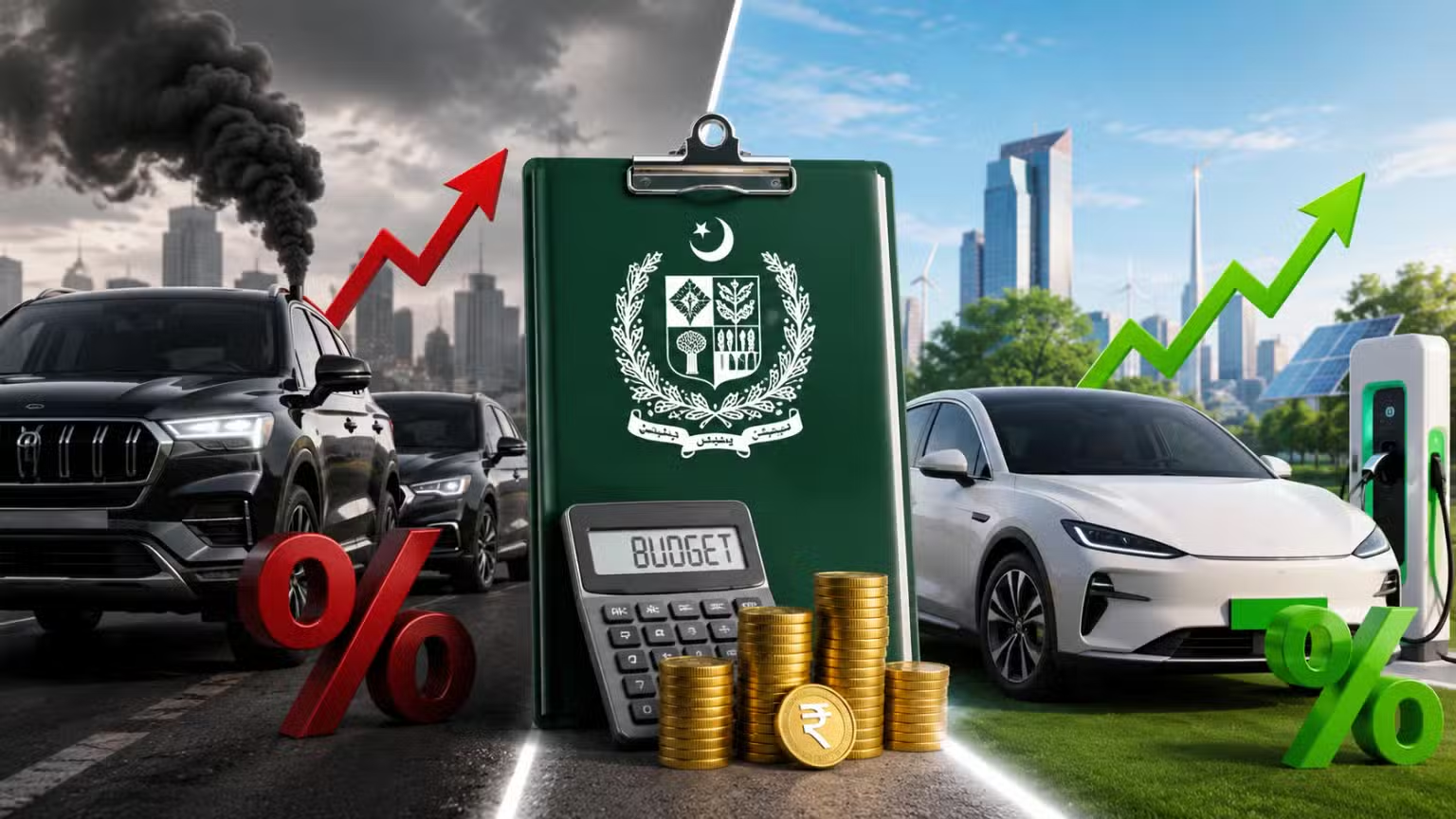
The amended Finance Bill also introduces significant changes for the automotive industry. Imported luxury electric vehicles will now be taxed based on dollar-denominated customs values instead of rupee-based thresholds. Meanwhile, customs duties on imported vehicles with engine capacities above 2,000cc have been increased substantially, making luxury vehicle imports more expensive.
Support for electric mobility remains a key policy objective. Incentives for electric motorcycles, rickshaws, buses, and passenger vehicles continue as part of the government’s broader strategy to encourage sustainable transportation and reduce fuel dependency.
Several sales tax amendments have also been approved. Wheat bran and rice bran have been added to the list of exempted items, while certain proposed provisions related to imported goods have been withdrawn. Additional refinements have been made to tax treatment for footwear, household utensils, and agricultural products.
The budget also strengthens efforts to digitize Pakistan’s tax administration. The Federal Board of Revenue (FBR) is set to implement faceless assessments, algorithm-based tax processing, centralized data systems, real-time production monitoring, and expanded use of third-party data to improve compliance and transparency.
Social welfare remains a central focus of the approved budget. Funding for the Benazir Income Support Programme (BISP), education initiatives, housing schemes, healthcare projects, and vocational training programs has been increased. The government has also approved a 7 percent increase in salaries and pensions, along with a 10 percent rise in the minimum wage.
Infrastructure development continues to receive significant attention, with allocations for roads, railways, dams, water projects, renewable energy initiatives, and urban development schemes. Major projects such as the M-6 Motorway, ML-1 railway upgrades, Diamer-Bhasha Dam, Mohmand Dam, and Karachi’s K-IV project remain among the government’s top priorities.
With the passage of the Finance Bill 2026-27, the government aims to promote economic growth, support exports, encourage investment, strengthen social protection programs, and accelerate Pakistan’s transition toward a more digital and competitive economy.