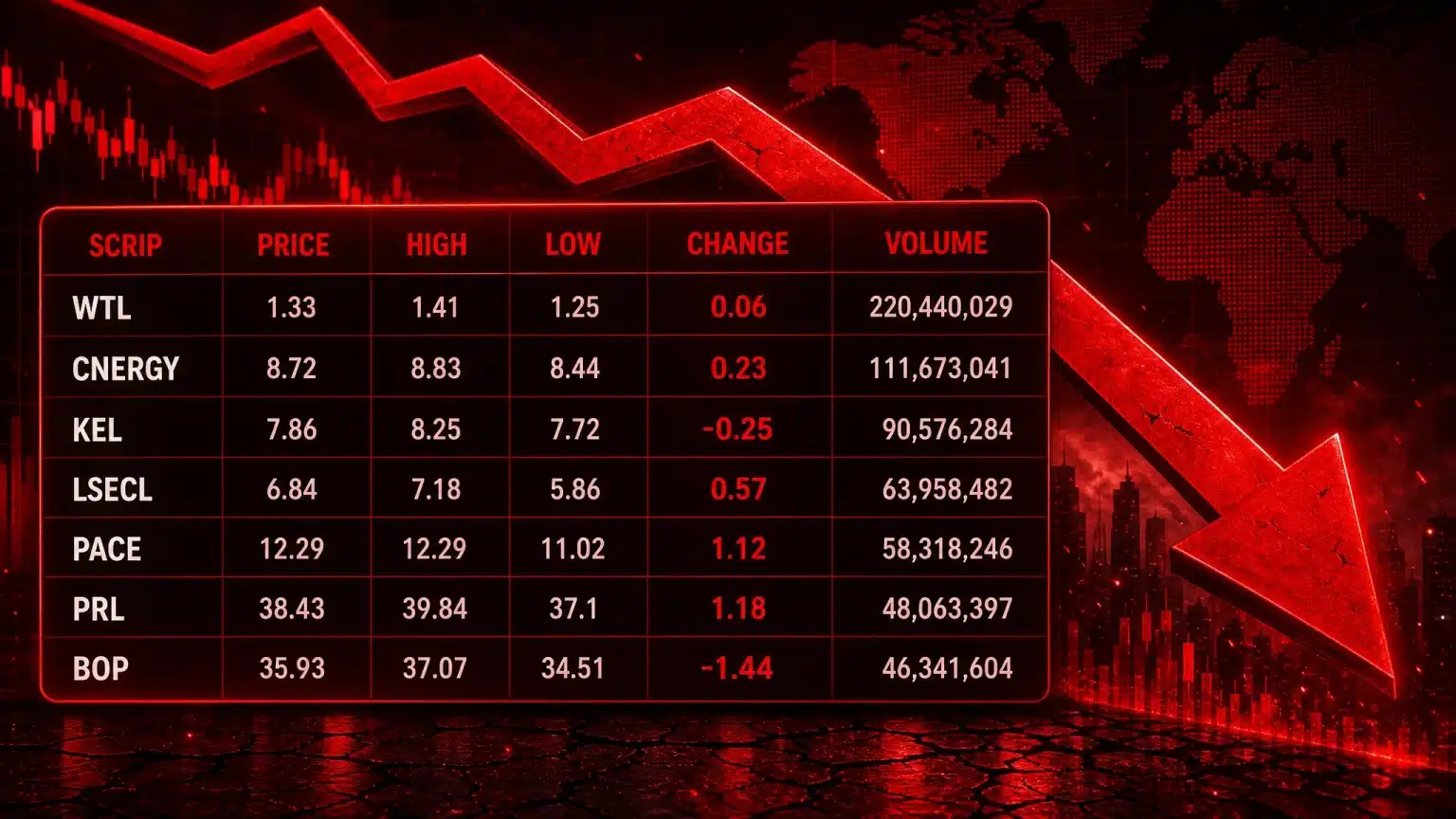
The Pakistan Stock Exchange (PSX) came under heavy selling pressure on Wednesday as renewed geopolitical tensions between the United States and Iran rattled investor confidence. The benchmark KSE-100 Index plunged by 4,626 points, slipping below the 182,000 mark as investors reacted to fears of a broader regional conflict and its potential economic consequences.
Market sentiment weakened after US President Donald Trump declared the Iran ceasefire effectively over, followed by fresh US military strikes on Iranian targets. The latest developments intensified concerns about instability in the Middle East, prompting investors to shift away from riskier assets and adopt a more cautious investment approach.
The KSE-100 Index dropped to an intraday low of 179,504 points before recovering some losses to close at 181,629 points. The decline of 4,626 points, or 2.48%, marked one of the market’s sharpest single-day setbacks in recent weeks.
Analysts believe geopolitical uncertainty remains one of the biggest factors influencing financial markets worldwide. Escalating military tensions often increase market volatility as investors assess the possible impact on global trade, energy supplies, and economic growth.
The renewed conflict also contributed to a rise in international oil prices. Since the Middle East plays a critical role in global energy production, concerns over supply disruptions typically push crude oil prices higher. For countries like Pakistan, which rely heavily on imported petroleum products, sustained increases in oil prices can place additional pressure on inflation, import costs, and the trade balance.
Higher oil prices may also affect corporate profitability, particularly for businesses dependent on fuel and transportation. These concerns weighed heavily on investor sentiment, leading to broad-based selling across multiple sectors at the PSX.
Market participants closely monitored developments in the international political landscape throughout the trading session. The uncertainty surrounding the conflict encouraged many investors to reduce exposure to equities until there is greater clarity regarding regional stability.
Despite the day’s sharp decline, financial experts note that stock markets often experience increased volatility during periods of geopolitical tension. Investor confidence can recover once uncertainty begins to ease or policymakers provide greater assurance regarding economic stability.
The performance of Pakistan’s stock market in the coming days is likely to remain closely linked to international developments. Any further escalation in the US-Iran conflict, continued movement in global oil prices, or changes in investor sentiment could influence market direction.
Investors will also be watching domestic economic indicators, government policy decisions, and corporate earnings alongside international events to evaluate future investment opportunities. While short-term volatility may continue, long-term market performance will depend on both global conditions and Pakistan’s broader economic outlook.
The latest decline underscores how closely Pakistan’s financial markets are connected to global geopolitical events. As uncertainty persists, investors are expected to remain cautious while monitoring developments that could shape market confidence in the weeks ahead.