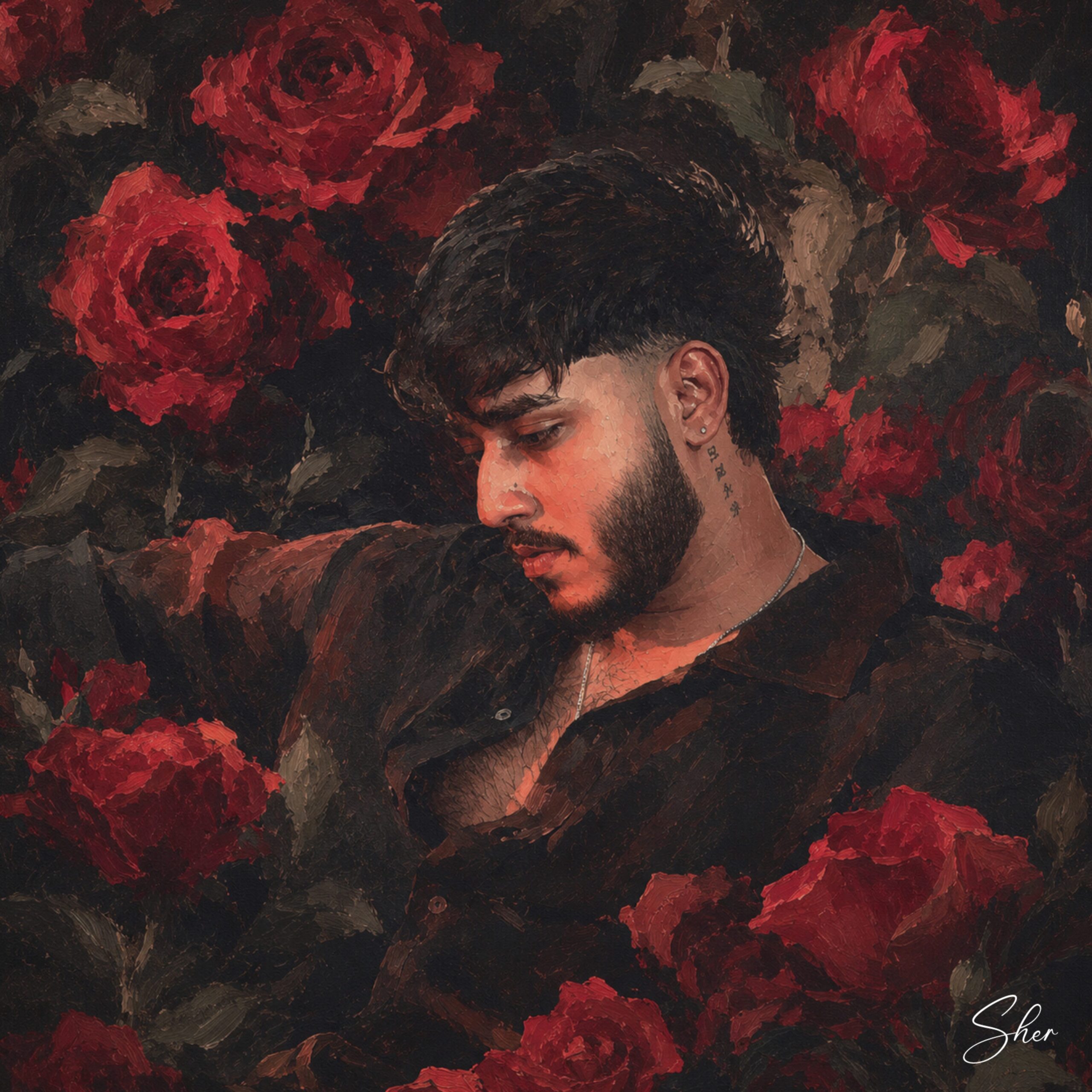
Some songs are imagined long before they are heard. Others reveal themselves in a moment.
Ali Raza’s new release “Sher,” created in collaboration with poet Zahid Bashir, belongs to the latter.
It began on an otherwise ordinary evening at the studio. Ali and Zahid were sitting together, talking, when Zahid casually turned towards him and said:
“Bhai, yeh sher sunain…”
“Pyar uttay likheya ay sher mein,
Yaad tenu keeta ay tay royi bari dair mein.”
It was simply a piece of poetry Zahid wanted Ali to hear.
But Ali heard a melody inside it.
“Rukein… let me compose something on it.”
And almost immediately, he began singing.
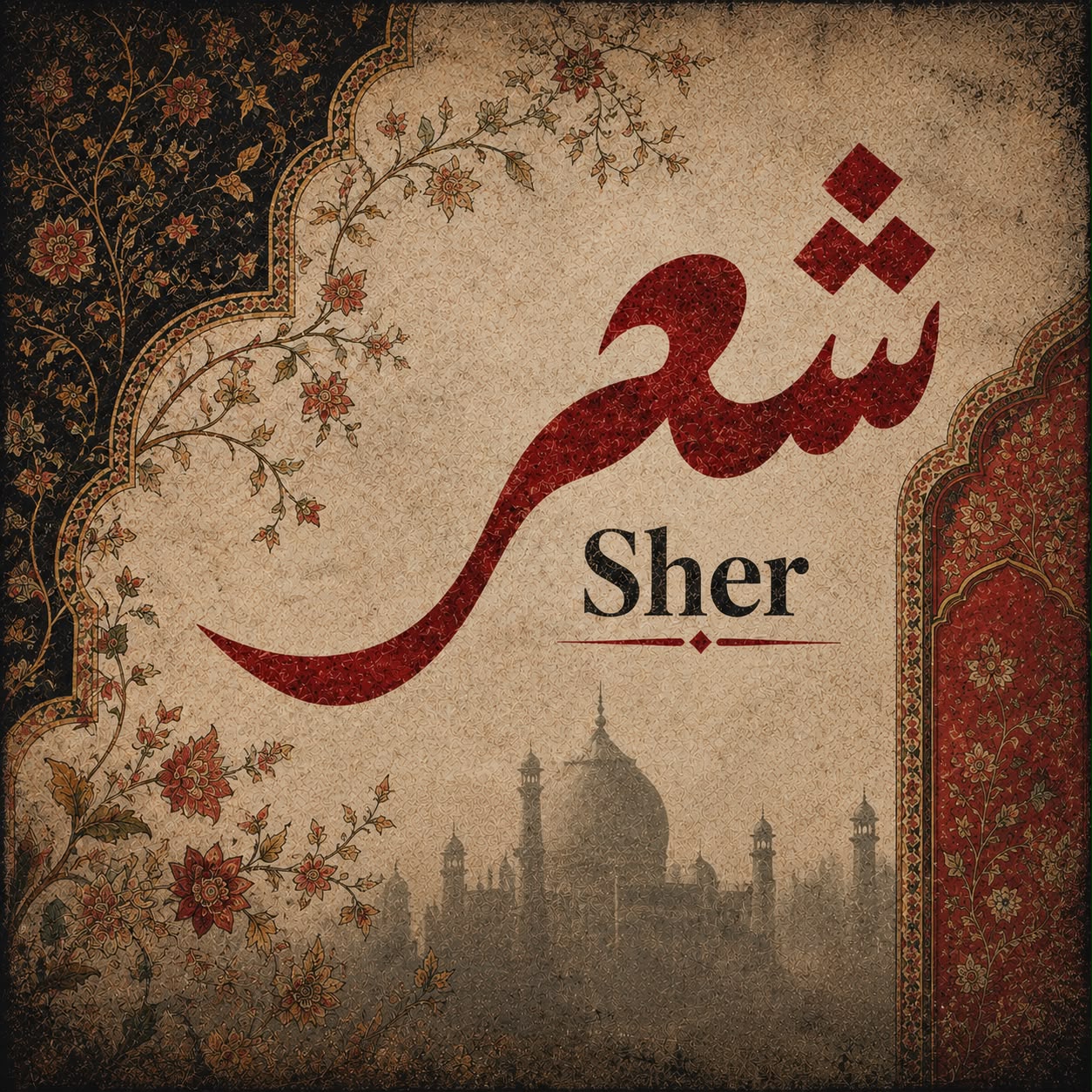
The Moment ‘Sher’ Found Its Melody
Ali sang the lines once, then again, slowly finding his way around the words.
Within minutes, the room felt different.
There are certain melodies that impress you instantly, and then there are melodies that make you unusually still. What Ali had stumbled upon that evening was closer to the latter.
It felt soft. Almost like a lullaby.
There was heartbreak in the words, but the melody wasn’t trying to exaggerate it. It carried the sadness gently. Everyone sitting there seemed to fall into the same quietness.
For a few moments, nobody wanted to interrupt.
Something about it felt serene.
Ali kept singing. Zahid listened. The original sher began to feel like the beginning of something rather than a complete thought.
And so Zahid started writing further.
The melody inspired more poetry; the new words gave Ali more to compose around. What had begun with two casually shared lines slowly grew into an entire song.
That exchange became the heart of Sher.
A poet heard his words becoming a melody. A musician heard a song hiding inside a poem.
Neither tried to force it much beyond that.
They simply followed the feeling.
Giving the Moment Its Sound
Once the composition and basic structure of Sher had taken shape, Ali brought in his friend Zain Ali Zeeshan to take the idea forward through music production.
It was an important next step. The song had been born in an extremely delicate, spontaneous moment, and the production needed to support that feeling rather than overwhelm it.
Zain worked around the composition Ali had created, giving the song its musical texture while allowing the poetry and melody to remain at the centre.
What began as Ali singing a few lines on a couch now had a sonic world around it.
The process remained collaborative throughout: Zahid’s words sparked Ali’s composition, and Zain’s production helped turn that composition into the finished record.
From the Couch to the Camera
By the next morning, there was another thought: if the song had come from such an intimate moment, its visual world should feel connected to that moment too.
The team could have taken Sher somewhere completely different visually.
Instead, they decided to build around the place where it had actually begun.
The same couch Ali had been sitting on while composing the song became the centre of the frame.
Objects and elements already present inside the room were rearranged and thoughtfully placed around it. There was art direction, composition and thought behind the visual—but rather than transforming the space into something unrecognisable, the idea was to find beauty within what was already there.
The room became the set without losing the feeling of being a room.
The couch remained the couch.
The surroundings were shaped into a frame.
And Ali remained sitting almost exactly where the song had first found him.
That balance became important.
The intention wasn’t to make the visual look untouched. It was to make it feel honest.
There was enough art to give Sher a visual identity, but not so much that the original intimacy disappeared underneath it.
Because some emotions become less believable when you polish them too far.
An Artistic Experiment That Became a Release
There are, of course, songs that benefit enormously from months of development and carefully constructed creative worlds.
Sher simply arrived through a different process.
It was an evening of poetry that unexpectedly turned into composition, then found another creative collaborator in Zain Ali Zeeshan, who produced the record, before eventually becoming a finished release.
That spontaneity became part of its character.
At its heart, Sher is an exchange between Zahid Bashir’s writing and Ali Raza’s instinct for melody.
Zahid’s opening lines created the spark. Ali responded musically. That melody encouraged Zahid to continue writing, and the words continued shaping where Ali took the composition. Zain then helped translate that raw musical idea into a produced record without losing the intimacy of where it began.
One creative instinct kept feeding another.
And perhaps that is why the final song retains the feeling of something discovered rather than constructed.
It doesn’t need to announce its sadness loudly.
It sits with it.
Brought to Life by Groovon
The final chapter was taking this intimate experiment and giving it a life beyond the room where it started.
“Sher” was released and brought to life by Groovon, carrying the original idea through its final creative and release journey while keeping the character of the song intact.
That meant allowing Sher to remain what it had always been: a simple piece of art born between friends, poetry and music—rather than trying to turn it into something it was never meant to be.
The Artist Behind ‘Sher’: Ali Raza’s Journey So Far
The simplicity of Sher becomes even more interesting when placed alongside the scale of Ali Raza’s journey over the last few years.
Ali’s relationship with music began long before streaming numbers or chart positions entered the picture.
Born in Karachi on 9 November 2006 and raised largely in Lahore, Ali started exploring music at around five years old. By the age of seven, he was already appearing in music competitions on national television.
As he grew older, singing expanded into songwriting, composition and playing instruments. Music became less about performing somebody else’s song and increasingly about creating a language of his own.
Eventually, alongside his younger brother Shajjar Hussain, better known as Shjr, Ali formed the musical duo Ali & Shjr.
What followed was a run of independent releases that would take two young Pakistani artists far beyond the audience they initially began creating music for.
Ali & Shjr: From ‘Laykin’ to ‘Heer’
Ali & Shjr’s catalogue has grown to include songs such as “Laykin,” “Heer,” “Sahara,” “Judai,” “MSG,” “Wishful,” “Galliyan,” “Sajna” and “Mein Na Rahoon.”
Among them, Laykin became an early defining record for the duo.
Its emotional songwriting and melodic simplicity connected with listeners at scale, eventually accumulating tens of millions of streams and views.
Then came “Heer.”
The song became one of the biggest turning points in Ali & Shjr’s journey.
Its audience stretched well beyond Pakistan, finding listeners across India, the Middle East and other international markets. Heer entered major streaming conversations globally while its music spread extensively through short-form video and user-generated content.
For young independent artists coming out of Pakistan, the scale of that response was significant.
But perhaps more importantly, Heer established something about Ali & Shjr that numbers alone couldn’t: their music could travel without needing to lose its cultural or emotional identity.
Chann Taara and Ali Raza Beyond the Duo
Alongside Ali & Shjr, Ali has gradually been building an individual musical identity through his own releases and collaborations.
One important chapter was “Chann Taara.”
Written and composed by Ali Raza, the song brought him together with Kinza Hashmi and introduced another side of his songwriting to a wider audience.
He has also collaborated with Shae Gill on Staring at Me, while continuing to move between his work with Shjr, individual records and collaborations with other artists.
And that makes Sher particularly interesting.
Because after experiencing the scale that songs like Heer and Laykin reached, Ali’s next artistic statement doesn’t necessarily try to become louder.
It becomes quieter.
From ‘Heer’ to ‘Sher’: The Instinct Remains the Same
There is an interesting thread connecting Ali Raza’s biggest songs with something as intimate as Sher.
The scale may change.
The process may change.
The collaborators may change.
But the instinct remains.
At the centre of Ali’s music is still the excitement of hearing an idea and immediately wanting to turn it into sound.
On this particular evening, that idea happened to arrive through Zahid Bashir:
“Bhai, yeh sher sunain…”
A few seconds later, Ali was composing.
Zahid continued writing. Ali shaped the composition. Zain Ali Zeeshan later stepped in to produce the music and give that raw idea its final sonic form.
By the next morning, the couch where it happened had become part of the visual.
A few objects from the room had been moved around it, a frame had been carefully created, and an ordinary corner of the studio had become the visual world of the song—without pretending to be anything other than what it was.
And Groovon took that little moment from the room and helped bring it into the world as a release.
That might be the best way to understand Sher.
It wasn’t simplicity for the sake of an aesthetic. The simplicity was part of the memory.
And instead of replacing that memory with something bigger, everyone involved chose to build their art around it.
A poet shared a sher.
A musician heard a melody.
A friend gave it sound.
And a simple evening became a song.