 By Sumavaya Iqbal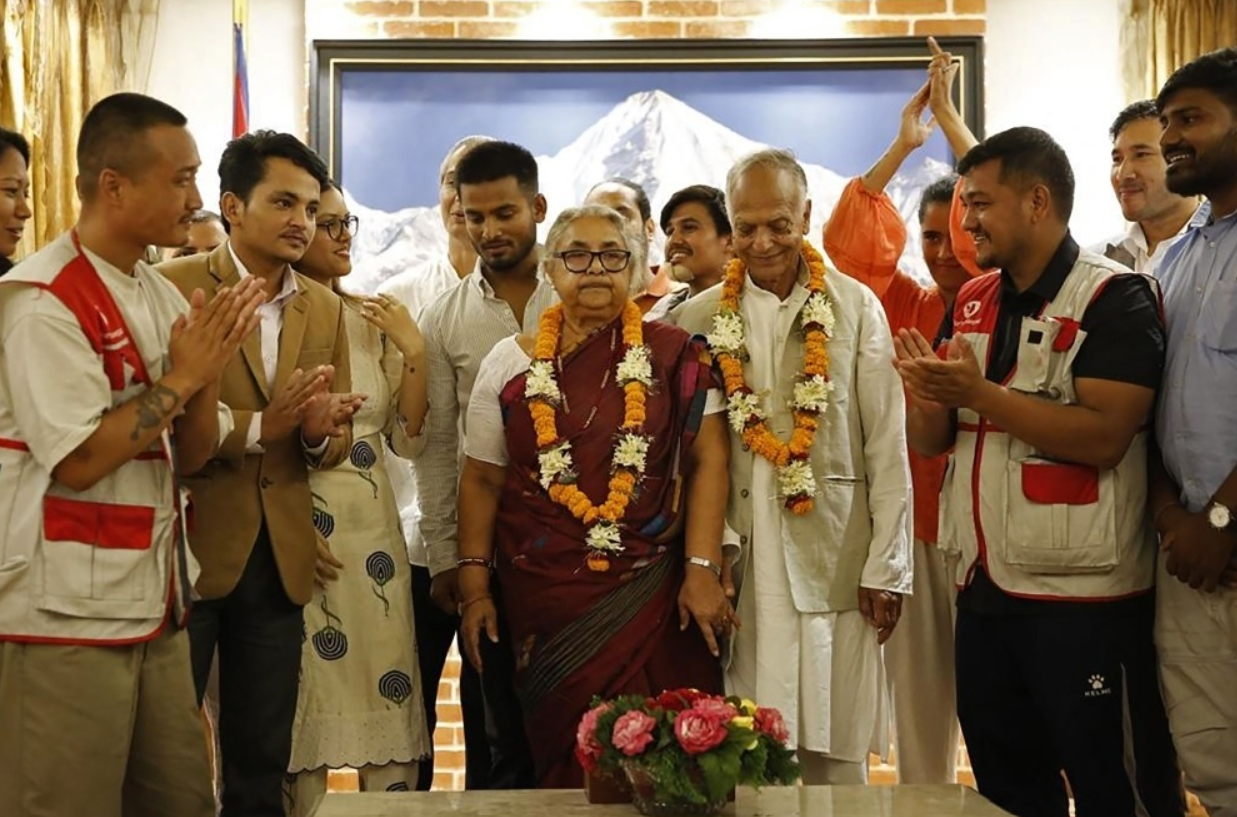
Streets Slowly Returning to Normal
Nepal’s capital Kathmandu began returning to normal on Saturday after days of deadly anti-corruption protests that shook the country. A curfew was eased, soldiers scaled back their presence, and daily life resumed as markets reopened and families visited temples.
The unrest, which left at least 51 people dead, marked the worst violence since the end of Nepal’s civil war and the abolition of the monarchy in 2008.
Historic Appointment of Sushila Karki
On Friday evening, former chief justice Sushila Karki, 73, was sworn in as Nepal’s interim prime minister. She became the country’s first woman to assume the role, a move seen as both symbolic and promising for a corruption-free future.
Her appointment followed intense negotiations between army chief General Ashok Raj Sigdel, President Ram Chandra Paudel, and representatives of the youth-driven “Gen Z” protest movement, who rallied online through Discord to push for change. Elections are now scheduled for March 5, 2026.
Demands for Anti-Corruption Reforms
For many Nepalis, corruption has been the root of frustration for years. Social worker Suraj Bhattarai praised Karki’s appointment, saying, “We think that the prime minister will address Nepal’s fight against corruption and take good governance forward.”
Shop worker Durga Magar, 23, echoed this sentiment, stressing that young people want corruption to end, regardless of who is in power.
Mourning Families Call for Change
The violent protests left grieving families demanding justice. Among the dead was Santosh Bishwakarma, 30, whose widow Amika recalled his dream of contributing to the nation. Clutching his photo, she pleaded: “He sacrificed his life for the country, and I hope the new government will help me.”
Mass cremations at Pashupatinath temple highlighted the scale of the tragedy, as families wept for loved ones and prayed for justice.
Regional and Global Reactions
Indian Prime Minister Narendra Modi extended best wishes to Karki, while analysts warned of steep challenges ahead, including rooting out entrenched corruption and addressing economic struggles.
Nepal faces daunting realities: nearly 82 percent of its workforce is in informal employment, while GDP per capita stands at just $1,447. For protesters, the hope is that this crisis marks a turning point in the nation’s history.