 By webdesk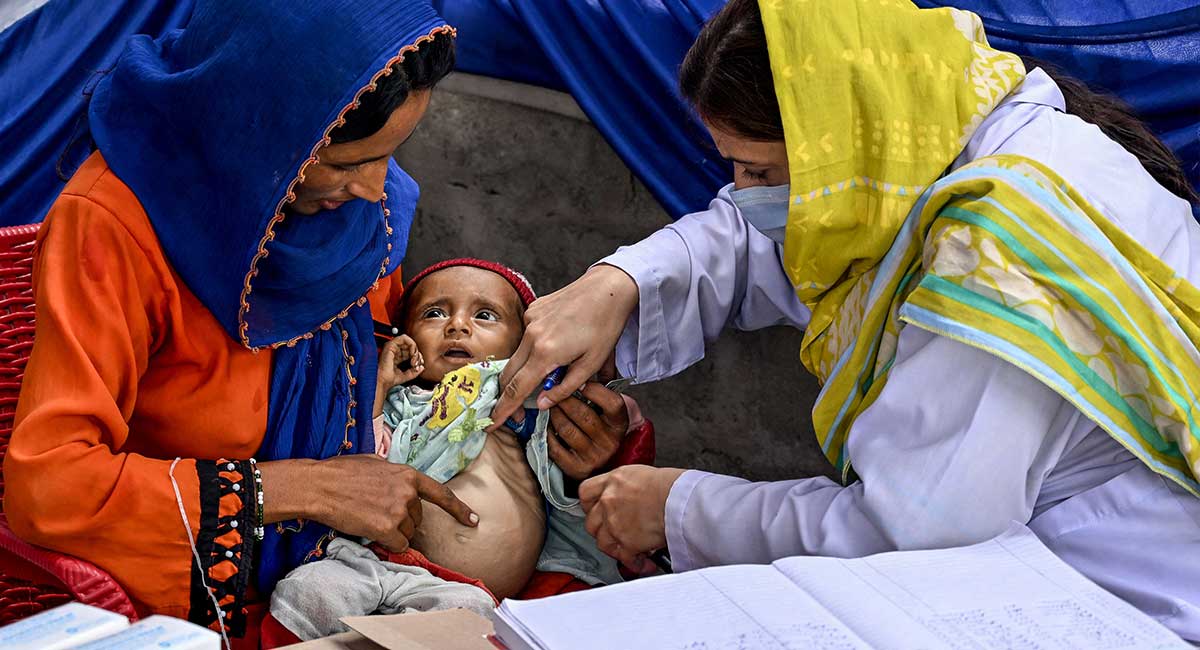
A Hidden Struggle Behind the Port City
Sindh, home to Karachi — Pakistan’s bustling financial hub — also harbors one of the country’s deepest crises just a few hours away in its rural villages. In Sujawal district, the contrast could not be sharper. Here, children with frail bodies and protruding bones endure harsh heat while their mothers, under the guidance of social workers, attempt to fight malnutrition with simple but effective solutions.
Despite the region’s proximity to urban wealth, nearly half of Sindh’s children under five suffer from malnutrition, with one in five facing its most severe form, wasting. The consequences of this crisis are evident in the faces and bodies of children who should be thriving but instead are struggling to survive.
Cooking Classes for a Lifeline
In Fateh Muhammad Soomro village, UNICEF-backed nutrition programmes have taken root. Social workers like Azma guide mothers in preparing affordable and nutritious meals using ingredients such as semolina and lentils. The approach is simple: demonstrate how local, inexpensive food can be transformed into life-saving meals for babies and toddlers.
For mothers like Shahnaz, aged 25, these lessons have been transformative. Previously, she relied almost entirely on potatoes for her six children. After a year of classes, she introduced variety into their diet. Affordable additions like lentils, semolina, and other proteins helped her daughter recover from malnutrition.
According to UNICEF nutritionist Mazhar Iqbal, the main challenge in Sindh is not just food scarcity but a lack of dietary diversity. Babies are often fed leftovers meant for adults, far too spicy for their delicate stomachs. Meat is rare and reserved for special occasions, yet cheaper sources of protein — offal, lentils, beans, and boiled bones — remain underutilized.
The Human Toll of Malnutrition
The statistics reflect a grim picture. Around 48% of children in Sindh under five are malnourished, and 72% of children in Sujawal are stunted — far higher than the already alarming national average of 42%. Stunting, linked directly to impaired brain and physical development, creates lasting impacts that ripple into adulthood, affecting education, productivity, and overall well-being.
Mothers like Kulsoom, pregnant with her sixth child, carry their own scars. She has already lost one child and worries for her youngest, who is dangerously weak. Her story reflects the generational cycle of malnutrition — where premature, underweight babies are born to anaemic mothers, perpetuating the crisis.
The lack of clean water and sanitation deepens the struggle. Children battling malnutrition are more vulnerable to diseases such as malaria, dengue fever, and diarrhoea. Their weakened bodies often display swollen bellies, sparse hair, and other visible signs of deficiency.
Cultural Norms and Misconceptions
While poverty plays a central role, cultural practices and myths add layers to the problem. Women in Sujawal, where only one in four can read or write, often lack access to accurate health information. Misconceptions such as eggs or dried fruits causing excessive bleeding prevent women from consuming vital nutrients.
Moreover, entrenched social norms dictate that women serve men first and eat only what remains. Even though women work long hours in the fields, their dietary intake is often the least prioritized. When food runs short, it is the mothers’ plates that are cut first.
This pattern leaves more than 45% of women in Sindh anaemic, increasing the risk of low birth weight babies. Malnutrition, therefore, is not merely a child’s issue — it begins in the womb and continues as women, weakened themselves, struggle to nourish their children.
Affordable Solutions, Complex Realities
The introduction of low-cost, nutrient-rich foods like semolina shows promise, but it also highlights the complexities of combating malnutrition in rural Sindh. It requires not only affordable access to food but also a shift in cultural attitudes, improved healthcare, and better sanitation facilities.
While initiatives by UNICEF and other organizations provide essential lifelines, the long-term fight against malnutrition must address the systemic barriers that keep rural families trapped in cycles of hunger and illness.