 By Digital Spartans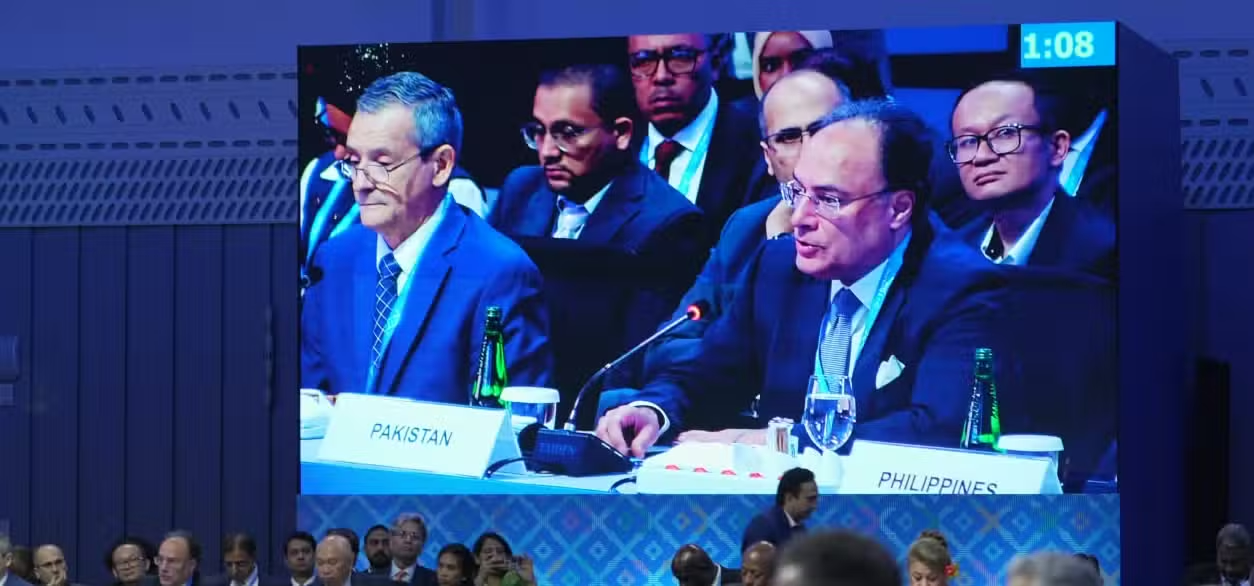
Pakistan’s Finance Minister Muhammad Aurangzeb has called for greater accountability and stronger implementation of climate finance initiatives, warning that international commitments must translate into practical results. His remarks highlight growing concerns over the gap between climate funding promises and the financial support actually reaching vulnerable countries.
Aurangzeb made the comments while speaking at the 17th V20 Ministerial Dialogue, held on the sidelines of the World Bank-IMF Annual Meetings in Bangkok on October 12, 2026. During the meeting, he reaffirmed Pakistan’s support for the Vulnerable Twenty (V20) group’s climate finance agenda.
The discussion focused on the importance of ensuring that climate finance delivers measurable benefits for countries facing serious environmental and economic challenges. For Pakistan, the issue is particularly significant because climate-related disasters can place additional pressure on public finances, infrastructure, agriculture, and communities.
Aurangzeb’s message emphasised that announcing funding commitments is not enough. Governments and international financial institutions must also demonstrate that promised resources are being delivered, allocated effectively, and used to achieve their intended objectives.
Pakistan Seeks More Effective Climate Finance
Climate finance plays an important role in helping developing countries prepare for environmental risks, strengthen infrastructure, and recover from climate-related disasters. However, access to funding, the speed of disbursement, and the conditions attached to financial support remain important concerns for vulnerable economies.
Pakistan has a strong interest in improving the effectiveness of international climate finance because floods, extreme heat, water stress, and other environmental pressures can affect economic activity and public spending.
When climate funding is delayed or does not reach its intended projects, governments may face difficulties implementing adaptation measures and strengthening resilience. This can leave vulnerable communities exposed to further economic losses and environmental risks.
Aurangzeb’s call for accountability highlights the need to assess climate initiatives according to their actual outcomes rather than the size of their announced commitments alone. Transparent reporting, clear responsibilities, and effective monitoring can help establish whether funding is producing meaningful results.
V20 Climate Finance Agenda Gains Importance
The Vulnerable Twenty, commonly known as the V20, brings together countries that face significant risks from climate change. The group advocates stronger international cooperation and improved access to financial resources for climate resilience and sustainable development.
For V20 members, climate finance is not simply an environmental issue. It is also connected to economic stability, debt pressures, development priorities, and the ability of governments to protect their populations from climate-related shocks.
Pakistan’s support for the V20 agenda reflects its interest in strengthening international financial cooperation and improving the availability of resources for climate-related projects.
The challenge is to ensure that funding mechanisms respond to the needs of vulnerable countries. This includes reducing unnecessary delays, improving access to available resources, and making funding arrangements more transparent.
Effective coordination between national governments, international lenders, development partners, and climate funds is essential to achieving these objectives.
Why Climate Finance Accountability Matters
Accountability is central to ensuring that climate finance achieves its intended purpose. Funding commitments must be accompanied by clear implementation plans, measurable targets, and systems for tracking progress.
Governments and funding institutions also need to provide reliable information about how much money has been committed, how much has been disbursed, and which projects have received support. These distinctions are important because announced pledges do not necessarily mean that the money is immediately available for use.
Stronger oversight can help identify implementation gaps and improve confidence among countries seeking international climate assistance. It can also help ensure that limited resources are directed towards projects with clear environmental and economic benefits.
For Pakistan, more effective climate finance could support disaster preparedness, resilient infrastructure, water management, and other initiatives designed to reduce vulnerability to environmental risks. However, the impact would depend on the availability of funding, the quality of project planning, and the effectiveness of implementation.
What Aurangzeb’s Message Means for Pakistan
Aurangzeb’s remarks place renewed attention on the need to turn international climate commitments into tangible outcomes. Pakistan’s climate priorities require not only financial pledges but also timely funding, transparent procedures, and projects that deliver measurable benefits.
The country’s economic circumstances make the efficient use of available resources particularly important. Climate-related damage can increase pressure on government spending while affecting livelihoods, agricultural production, and essential infrastructure.
A more accountable climate finance system could help vulnerable countries plan long-term investments with greater certainty. It could also improve cooperation between international financial institutions and governments working to reduce climate risks.
Ultimately, the effectiveness of climate finance should be judged by whether it reaches the intended recipients and helps deliver practical improvements. Aurangzeb’s call for accountability underscores the importance of moving beyond announcements towards transparent implementation, measurable results, and stronger climate resilience for Pakistan and other vulnerable economies.