 By Digital Spartans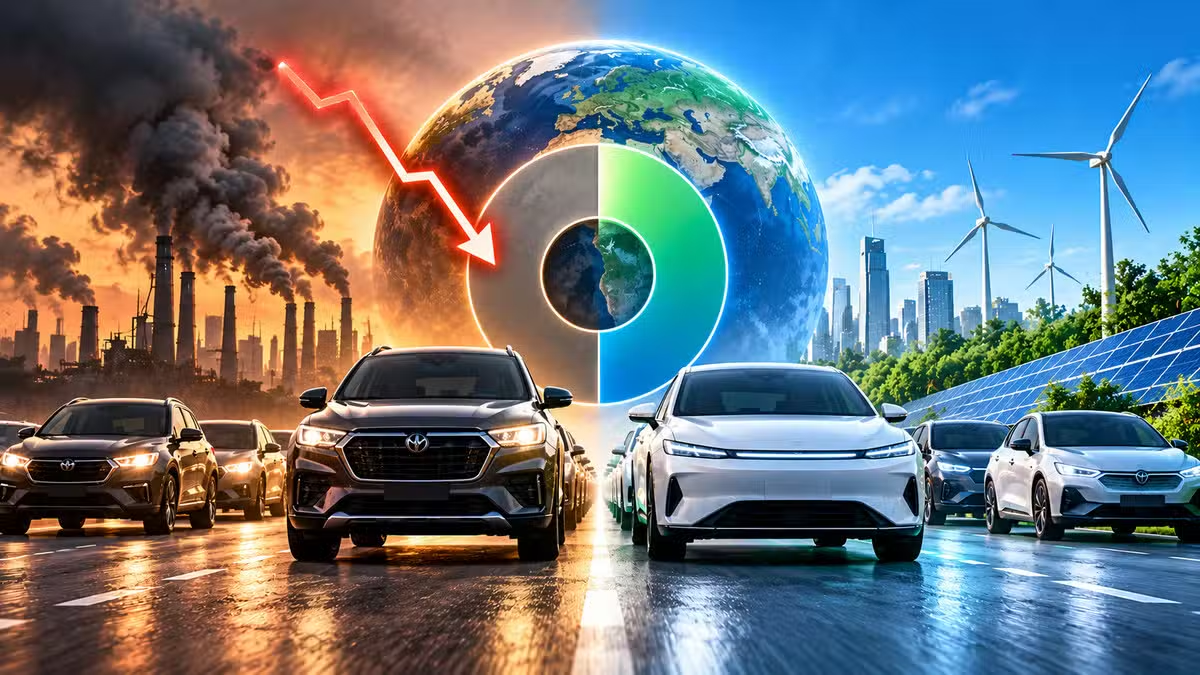
Gasoline-only vehicles accounted for just 49% of global new-car sales during the first half of 2026, marking a significant shift in the international automotive market. The figure represents the first time on record that conventional petrol-only cars have fallen below half of new vehicle sales worldwide.
According to data reported by Mobility Global, gasoline-only vehicles held a 73% share of global new-car sales in 2021. Their share has since declined by 24 percentage points, highlighting the growing demand for alternative powertrain technologies.
The changing market reflects a broader transformation in the automotive industry, as manufacturers expand their hybrid and electric vehicle offerings and consumers explore alternatives to traditional petrol-powered cars.
However, the decline in gasoline-only sales does not mean that fully electric vehicles now dominate the global market. A substantial portion of the lost market share has shifted towards hybrid vehicles, which combine electric motors with conventional combustion engines.
Hybrid Cars Gain Ground in the Global Market
Hybrid vehicles have become an important part of the transition away from gasoline-only cars. Unlike conventional petrol vehicles, hybrids use electric motors alongside combustion engines to improve energy efficiency under certain driving conditions.
Some hybrids can recover energy during braking and use it to assist the engine, potentially reducing fuel consumption. Plug-in hybrid models can also be charged externally and travel certain distances using electric power alone.
These technologies offer an alternative for buyers who want improved fuel efficiency without relying entirely on public charging infrastructure. This can be particularly appealing in markets where charging networks remain limited or fully electric vehicles are relatively expensive.
The growing presence of hybrids also explains why the decline in petrol-only vehicles should not be interpreted as an equivalent increase in fully electric car sales.
Instead, the figures point to a more gradual shift towards a mix of conventional, hybrid, plug-in hybrid, and battery-electric vehicles.
Why Conventional Petrol Cars Are Losing Market Share
Several factors are influencing consumer decisions in the global automotive market. Fuel efficiency, running costs, government policies, environmental concerns, and the availability of new vehicle technologies all contribute to changing purchasing patterns.
Automakers are also expanding their hybrid and electric vehicle portfolios to meet demand and respond to regulations in different markets. As more models become available across price categories, buyers have additional alternatives to conventional petrol-powered vehicles.
In some countries, government incentives and emissions regulations have encouraged the adoption of lower-emission vehicles. Elsewhere, fuel prices and concerns about long-term operating expenses have increased interest in vehicles that use less petrol.
However, these trends vary significantly by country. Consumer purchasing power, infrastructure, electricity prices, fuel availability, and local government policies can all affect the pace of the transition.
The global sales figures therefore reflect a combination of market forces rather than a single worldwide move towards one particular technology.
Electric Vehicles Continue to Shape the Automotive Industry
Battery-electric vehicles are an important part of the automotive transition because they operate without a conventional combustion engine. Their adoption can reduce direct tailpipe emissions, although their overall environmental impact also depends on electricity generation, battery production, and manufacturing processes.
Despite growing interest in fully electric models, practical considerations continue to influence purchasing decisions. Charging access, driving range, vehicle prices, charging times, and battery performance remain important factors for many consumers.
Hybrid vehicles can offer a middle ground by providing some benefits of electric propulsion while retaining a combustion engine. This flexibility has helped make hybrids an important option in markets where the transition to fully electric transport is progressing at different speeds.
For manufacturers, the changing balance of sales creates both opportunities and challenges. Companies must decide how to allocate investment between petrol vehicles, hybrids, plug-in hybrids, and fully electric models while responding to regional demand and regulatory requirements.
What the Sales Shift Means for the Future of Cars
The decline in gasoline-only vehicles to 49% of global new-car sales during the first half of 2026 marks an important milestone for the automotive industry. Compared with their 73% share in 2021, conventional petrol-only cars now account for a considerably smaller proportion of new vehicle purchases.
Nevertheless, the figures do not indicate that combustion engines are disappearing. Hybrid vehicles still rely on them, and conventional petrol cars continue to serve consumers in many markets.
The more significant development is the growing diversity of powertrain technologies available to buyers. Automakers are increasingly competing across several vehicle categories rather than relying exclusively on traditional gasoline engines.
As vehicle technology, charging infrastructure, fuel prices, and government policies evolve, the balance between these technologies may continue to change. For now, the latest figures show that gasoline-only vehicles no longer account for a majority of global new-car sales, signalling a major change in consumer choices and automotive industry strategy.