 By Digital Spartans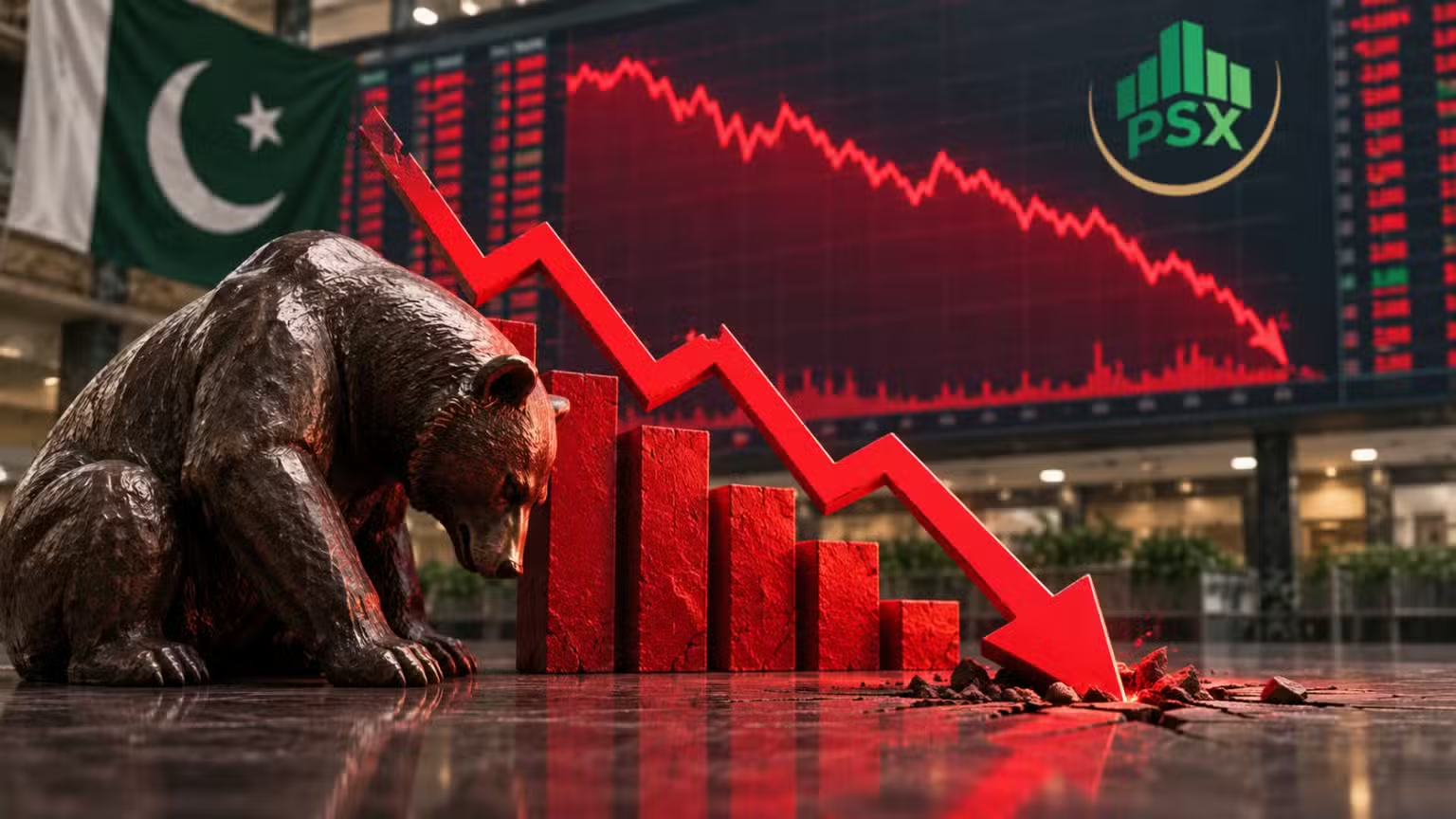
The Pakistan Stock Exchange (PSX) witnessed its steepest decline in months on Tuesday as investor confidence weakened following a sharp escalation in tensions between the United States and Iran. The benchmark index plunged 6,402 points, or 3.56 percent, to close at 173,519, marking one of the largest single-day losses in recent months.
The broad-based sell-off came after reports that the United States had ended its truce with Iran, raising concerns over renewed military confrontation in the Middle East. Investors reacted cautiously to the growing uncertainty, leading to heavy selling across multiple sectors of the market.
According to Topline Securities, market sentiment deteriorated after reports of renewed US military action, including airstrikes and the reimposition of a naval blockade. The situation intensified further following reports that Iran had targeted additional oil tankers passing through the strategically important Strait of Hormuz.
The latest developments have increased fears of wider regional instability, disruptions to global energy supplies, and heightened geopolitical risks. Since the Strait of Hormuz is one of the world’s busiest oil shipping routes, any threat to maritime traffic has the potential to affect international oil prices and global financial markets.
The uncertainty prompted investors to reduce exposure to equities, resulting in broad declines across banking, energy, cement, oil and gas, and other major sectors listed on the Pakistan Stock Exchange. Analysts noted that the selling pressure reflected concerns over external risks rather than company-specific fundamentals.
Financial experts believe geopolitical tensions often trigger risk-averse behavior among investors, with many shifting funds toward traditionally safer assets until market conditions stabilize. Pakistan’s stock market, like many emerging markets, remains sensitive to major global events that influence investor confidence and capital flows.
The decline also highlights how international developments can quickly impact domestic financial markets. Rising oil prices, increased import costs, and concerns over inflation could add further pressure to Pakistan’s economy if regional tensions continue to escalate.
Market participants will now closely monitor upcoming geopolitical developments and their impact on global commodity markets. Investors are also expected to watch for policy responses, corporate earnings, and economic indicators that could help restore confidence in the weeks ahead.
Despite the sharp correction, analysts advise long-term investors to focus on market fundamentals rather than short-term volatility, noting that geopolitical shocks often create temporary uncertainty before markets gradually stabilize.