 By Sumavaya Iqbal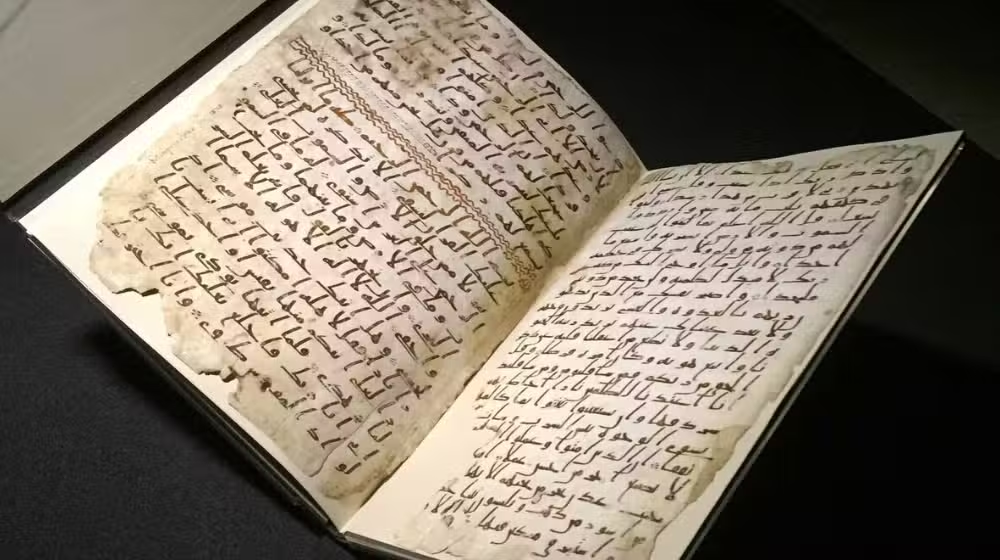
A significant discovery in the field of Islamic scholarship has emerged as the King Abdulaziz Public Library revealed a rare manuscript titled “Gharib Al Quran,” dating back nearly a millennium. The work is attributed to renowned early Islamic scholar Abu Ubaidah Mamar Ibn Al Muthanna and is being hailed as a valuable contribution to the study of Quranic sciences.
According to officials, the manuscript originates from the fourth century and consists of 23 folios, each measuring approximately 17 by 22 centimeters. The text is written in a clear Andalusian script, while the names of Quranic chapters are distinctly inscribed in Kufic script, reflecting the artistic and scholarly traditions of early Islamic civilization.
Experts have noted that this manuscript is an unpublished work, which significantly enhances its importance for researchers and historians. Its content provides unique insights into linguistic interpretations of the Quran, particularly focusing on rare and complex vocabulary, which is central to the study of “Gharib Al Quran.”
The discovery highlights the enduring legacy of Islamic scholarship and the جهود made by institutions to preserve and showcase historical texts. Manuscripts like this not only deepen understanding of religious studies but also offer a glimpse into the intellectual and cultural advancements of the time.
Scholars believe that the preservation and study of such works can play a crucial role in bridging historical knowledge with contemporary research. The manuscript is expected to attract global academic interest, further strengthening Saudi Arabia’s role in safeguarding Islamic heritage.
As rare discoveries continue to surface, they reinforce the richness of Islamic intellectual history and underscore the importance of ongoing efforts to document, preserve, and share these invaluable treasures with the world.