 By Digital Spartans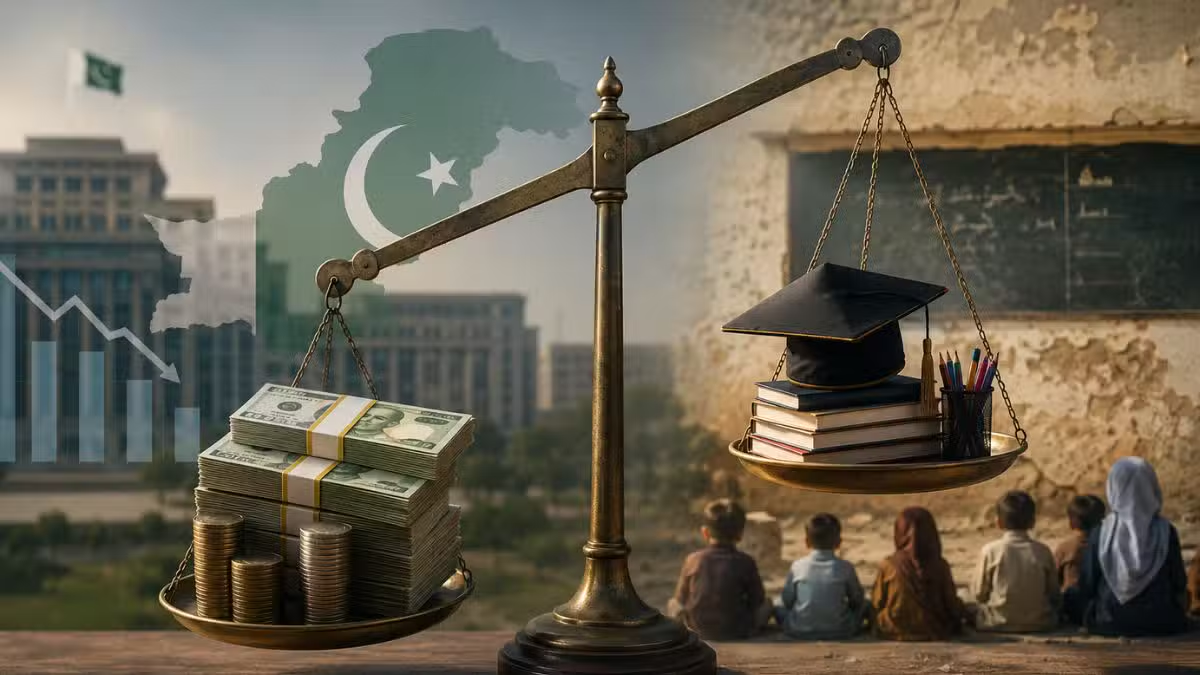
Pakistan allocated only 0.8 percent of its Gross Domestic Product (GDP) to education during FY2025, according to the Pakistan Economic Survey 2025-26. The latest figures have renewed concerns about the country’s investment in human capital and the long-term development of its education sector.
The survey revealed that combined spending by federal and provincial governments on education reached Rs. 962 billion during the fiscal year. Despite this substantial amount in absolute terms, education expenditure remained below one percent of GDP, a figure that education experts consider significantly lower than international benchmarks.
The findings come at an important moment as the federal government prepares to unveil the Budget 2026-27. Policymakers, education advocates, and economists are expected to closely examine future allocations for education amid growing concerns about literacy rates, learning quality, and access to educational opportunities.
Insufficient investment in education can have far-reaching consequences. Limited funding affects the development of schools, colleges, and universities while also impacting teacher training programs, classroom resources, digital learning initiatives, and basic educational infrastructure across the country.
The issue is particularly important as Pakistan continues to face challenges related to literacy improvement and the reduction of out-of-school children. Experts argue that increased spending is essential to expand educational access and improve learning outcomes nationwide.
The Economic Survey also highlighted investments in higher education during FY2025. The government allocated Rs. 34.905 billion to the Higher Education Commission (HEC) for the implementation of 147 development projects aimed at strengthening the country’s higher education system.
These projects included 129 ongoing initiatives, 12 newly approved schemes, and six previously funded Public Sector Development Programme (PSDP) projects associated with public universities and the Higher Education Commission. The projects are intended to enhance research capabilities, academic infrastructure, and educational opportunities for students across Pakistan.
While these higher education initiatives represent positive progress, experts believe broader investment is needed throughout the education system. Sustainable improvements in literacy, skills development, and workforce readiness require consistent funding at all levels of education.
As Pakistan seeks to strengthen its economy and compete in an increasingly knowledge-driven world, education remains a critical pillar of national development. Greater investment in the sector is widely viewed as essential for improving human capital, boosting productivity, and creating better opportunities for future generations.
The latest survey underscores the need for long-term education reforms and increased financial commitments to ensure that quality education becomes accessible to all citizens across the country.