 By Digital Spartans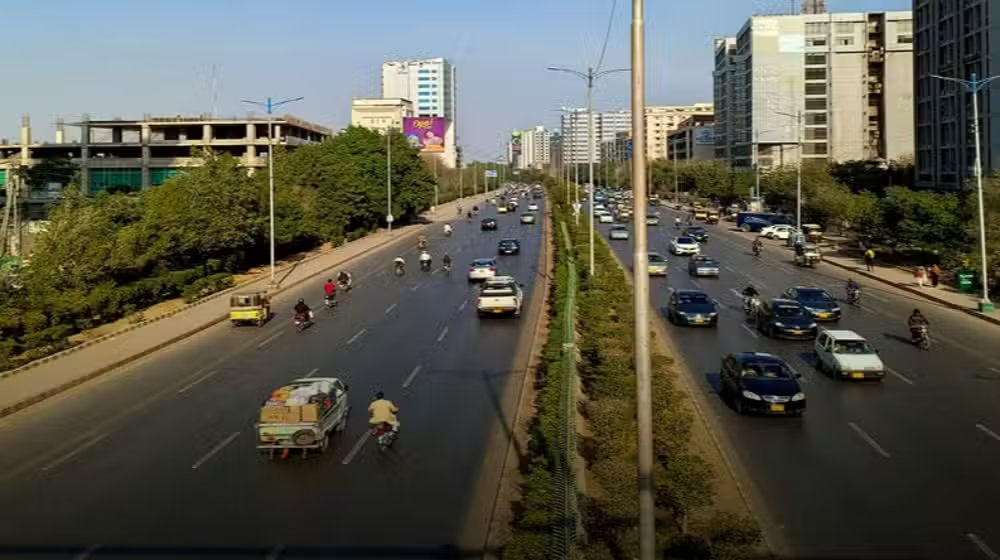
Traffic authorities in Karachi have announced a new lane management plan for Shahrah-e-Faisal, aiming to streamline traffic flow on one of the city’s busiest corridors. The initiative will specifically regulate the movement of motorbikes, buses, and rickshaws by assigning them designated lanes.
Under the new rules, these vehicles will be required to stay within their allocated lanes, reducing lane switching and minimizing congestion. Authorities believe that structured lane discipline will help improve overall road efficiency and enhance safety for commuters.
The plan also introduces strict enforcement measures. Violators of the lane restrictions will be fined through Karachi’s e-ticketing system, ensuring that penalties are issued digitally and efficiently. This move reflects a growing shift toward technology-driven traffic management in the city.
Peer Muhammad Shah stated that the primary objective of the initiative is to bring order to the chaotic traffic patterns often observed on Shahrah-e-Faisal. By regulating specific vehicle categories, officials aim to create a smoother and more predictable traffic environment.
Shahrah-e-Faisal serves as a critical artery connecting key commercial and residential areas in Karachi. Due to its heavy daily traffic volume, even minor disruptions can lead to significant delays. The introduction of designated lanes is expected to reduce bottlenecks and improve commute times for thousands of daily travelers.
Traffic experts often emphasize that lane discipline plays a crucial role in modern urban mobility systems. With proper enforcement and public cooperation, such measures can significantly reduce accidents, improve fuel efficiency, and lower stress levels for drivers.
Authorities are expected to run awareness campaigns alongside enforcement to ensure that commuters understand and adapt to the new system. As implementation begins, the success of the initiative will largely depend on compliance and consistent monitoring.