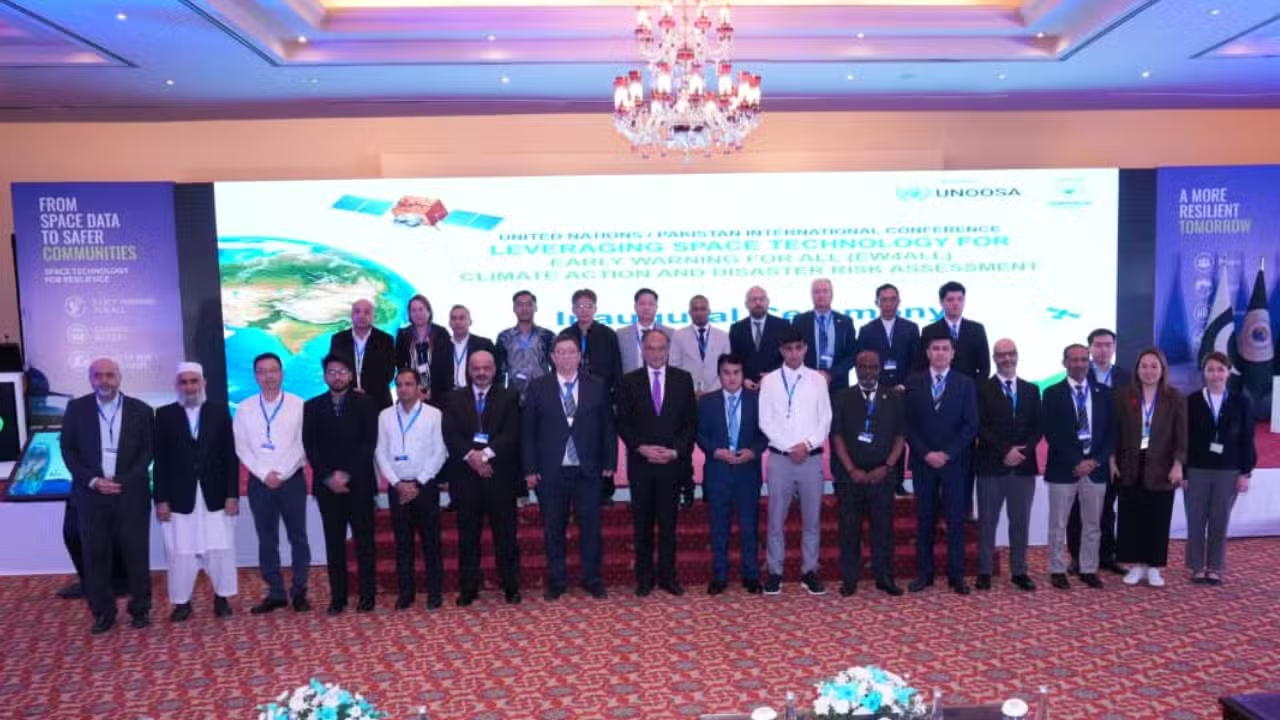
Pakistan’s Space and Upper Atmosphere Research Commission (SUPARCO) has inaugurated an international conference in Islamabad focused on using space technology to improve early warning systems, address climate challenges and strengthen disaster risk management.
The five-day event, titled the International Conference on Leveraging Space Technology for EW4All, Climate Actions and Disaster Risk Assessment, is being held from October 27 to 31, 2026, at Serena Hotel, Islamabad. The conference is organized in collaboration with international space and scientific organizations.
Federal Minister for Planning, Development and Special Initiatives, Prof. Ahsan Iqbal, attended the inaugural ceremony as the chief guest. The gathering aims to encourage international cooperation and highlight how satellite-based technologies can support climate resilience and disaster preparedness.
The conference brings together approximately 250 national and international participants from 20 countries. Representatives from space agencies, research institutions, United Nations bodies and government departments are participating in discussions on practical applications of space technology.
SUPARCO is organizing the event in collaboration with the United Nations Office for Outer Space Affairs (UNOOSA), the Inter-Islamic Network on Space Sciences and Technology (ISNET), and the Asia-Pacific Space Cooperation Organization (APSCO). The United Nations Platform for Space-based Information for Disaster Management and Emergency Response (UN-SPIDER) is also among the participating organizations.
Other international participants include the United Nations World Food Programme (WFP) and the International Telecommunication Union (ITU). Space and research institutions from several countries are also contributing to the conference, reflecting the growing importance of cross-border cooperation in addressing climate-related risks.
Participating institutions include Indonesia’s National Research and Innovation Agency (BRIN), the Iranian Space Research Center, Iraq’s Space Research and Technology Center, and the Turkish Space Agency. The TUBITAK Space Technologies Research Institute, Vietnam’s National Remote Sensing Department and Ministry of Agriculture and Environment, and Nepal’s Ministry of Energy, Water Resources and Irrigation are also represented.
A key focus of the conference is the role of space-based information in strengthening early warning systems. Satellite observations can help monitor changing weather patterns, identify environmental risks and improve the availability of information needed by authorities before disasters occur.
Such capabilities are particularly important for countries facing floods, droughts, extreme temperatures, storms and other climate-related hazards. Timely and reliable information can help governments prepare emergency responses, protect vulnerable communities and reduce potential damage to infrastructure and livelihoods.
The conference also highlights the connection between climate action and disaster risk assessment. Space technology can provide valuable data for monitoring environmental changes, assessing vulnerable areas and supporting evidence-based planning. Combining satellite information with ground-based observations can further improve the accuracy of risk assessments.
The Early Warnings for All (EW4All) initiative provides an important framework for these discussions. Its broader objective is to improve access to effective early warning systems so that communities can receive timely alerts and take protective action against hazardous events.
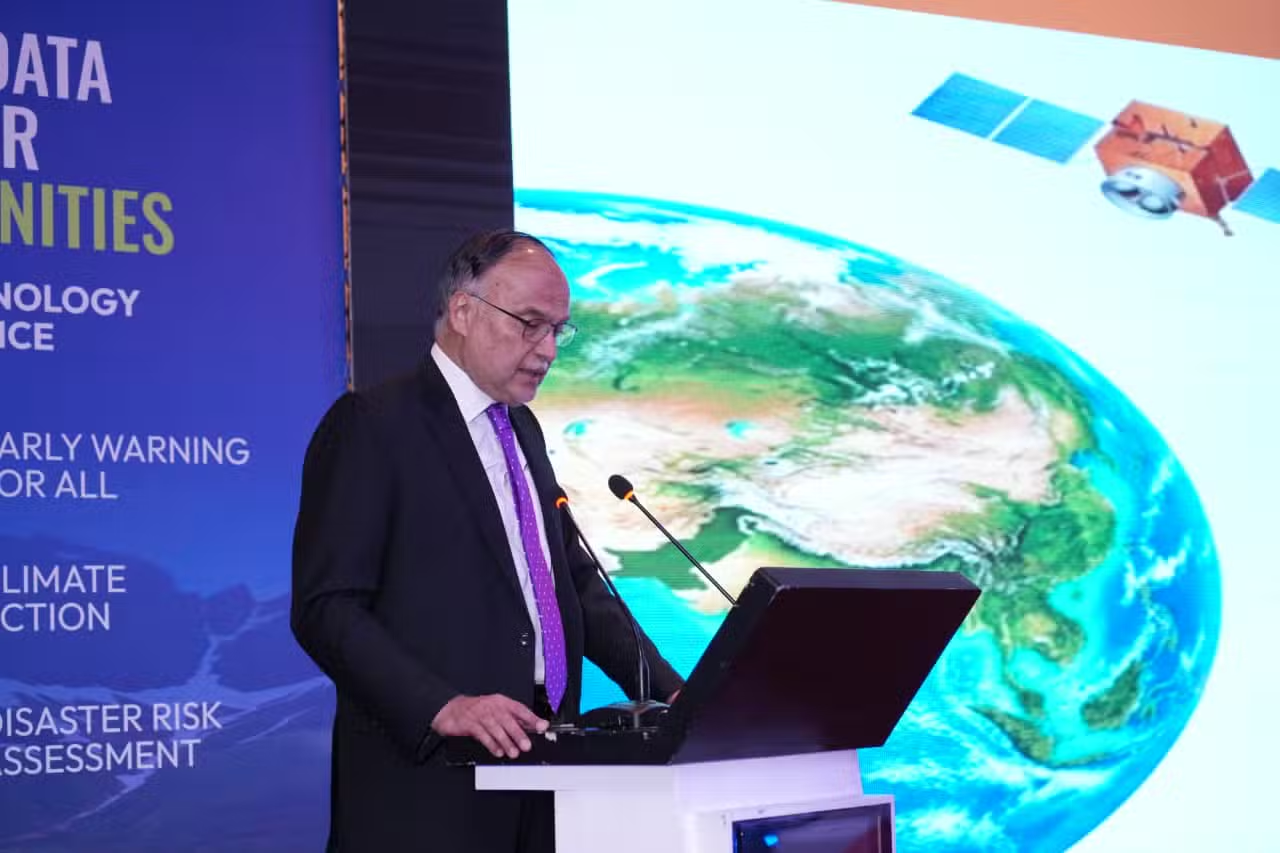
For Pakistan, the conference offers an opportunity to strengthen its engagement with international partners and explore new applications of satellite technology in disaster management and climate resilience. Collaboration between scientific organizations, government institutions and international agencies can support knowledge-sharing and the development of more effective warning mechanisms.
The participation of organizations from Asia and other regions also creates opportunities to exchange technical expertise and discuss approaches that can be adapted to different national circumstances.
As climate-related risks continue to challenge communities around the world, the use of reliable scientific information is becoming increasingly important. Space-based monitoring, international cooperation and stronger early warning systems can contribute to better preparedness and more informed decision-making.
Through this international conference, SUPARCO and its partner organizations are bringing together experts to examine how space technology can support climate action, disaster risk reduction and the development of more resilient communities. The discussions scheduled through October 31 are expected to maintain attention on the practical role of satellite data and international collaboration in addressing these shared challenges.