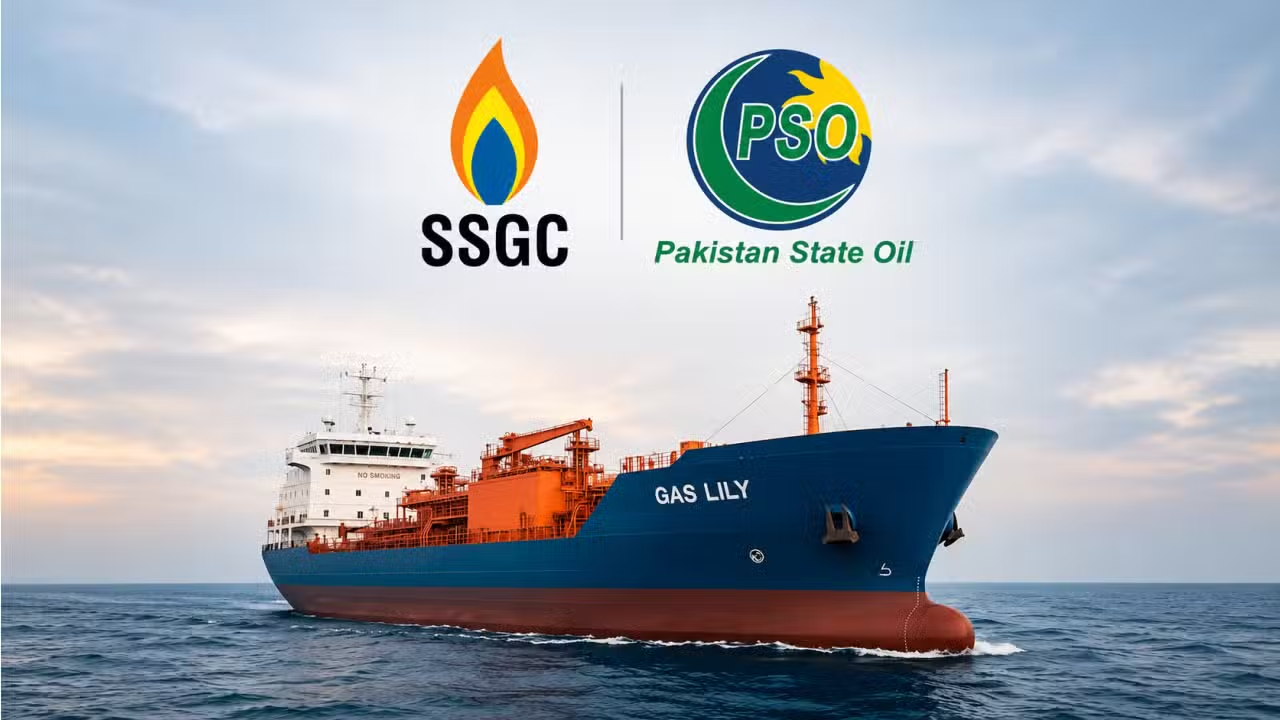
Pakistan’s state-owned oil and gas companies are facing a potential financial loss of approximately Rs. 1 billion after buyers refused to purchase an expensive imported liquefied petroleum gas (LPG) shipment. The situation has raised concerns about the government’s revised LPG import policy, pricing decisions and the financial risks associated with importing fuel at prices that exceed prevailing market rates.
The companies facing the potential loss are Sui Southern Gas LPG Limited (SLL) and Pakistan State Oil (PSO). Both organisations are struggling to find buyers willing to lift the imported LPG cargo, creating additional financial pressure as the shipment remains largely undistributed.
The 20,000-metric-tonne LPG shipment arrived at Karachi’s Port Qasim on November 18, 2026. Imported from Abu Dhabi, the cargo represents the first major shipment under the federal cabinet’s revised LPG import and pricing policy announced on November 3.
Under the arrangement, Sui Southern Gas LPG Limited holds 15,000 metric tonnes of the imported consignment, while Pakistan State Oil is responsible for the remaining 5,000 metric tonnes.
However, the imported product has encountered resistance from potential buyers because its price is considerably higher than the rates currently available in the domestic market.
This price difference has made the cargo difficult to sell, leaving the two state-owned companies exposed to a growing financial burden.
The situation is becoming more complicated as much of the imported LPG is still awaiting unloading. With the shipment occupying valuable terminal and shipping capacity, additional charges are accumulating while the companies attempt to secure buyers.
Terminal expenses are adding to the overall cost of the cargo. Furthermore, the possibility of additional vessel penalties could increase the financial exposure if the unloading process faces further delays.
The potential Rs. 1 billion loss highlights the risks involved in importing petroleum products without ensuring that their prices remain competitive with local market conditions.
For LPG importers and distributors, pricing plays a major role in determining whether imported supplies can attract sufficient demand. When imported products become more expensive than locally available alternatives, buyers may avoid purchasing them, particularly when they have access to cheaper supplies.
The latest development also places the spotlight on the federal cabinet’s revised LPG import and pricing framework. Since the November 18 shipment was the first major consignment under the updated policy, its commercial difficulties could raise questions about the effectiveness of the new arrangement.
Pakistan relies on LPG to meet energy requirements in households, commercial establishments and areas where natural gas supplies are limited. Any disruption in the import and distribution process can therefore have implications for the wider energy market.
For SLL and PSO, the immediate challenge is to manage the expensive cargo, limit further port and vessel-related costs and find buyers willing to purchase the imported product.
The situation demonstrates how pricing differences, shipping delays and import-related expenses can create substantial financial risks for state-owned energy companies.
Whether the two organisations can recover their investment or reduce the potential loss will depend on their ability to sell the remaining LPG cargo and manage the additional costs associated with its delayed unloading.