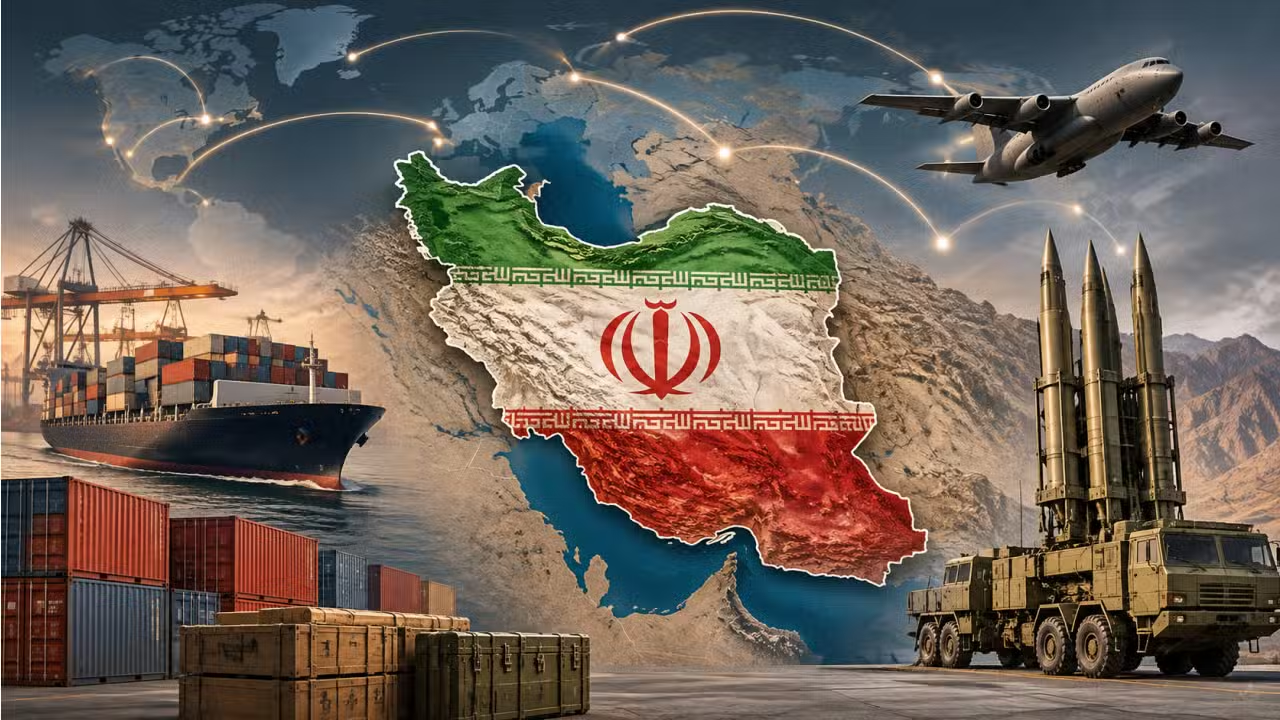
Iran has reportedly imported military equipment worth approximately $2.3 billion since January 2025 through a network of secret procurement agencies and international trade channels, according to a Reuters investigation.
The investigation found that the Islamic Revolutionary Guard Corps (IRGC) has relied on an extensive procurement system to obtain military hardware and maintain its weapons programmes despite Western sanctions.
According to the report, more than 5,000 agencies linked to Iran’s Ministry of Defense and Armed Forces Logistics (MODAFL) were identified as part of the network. These organisations reportedly operate through foreign intermediaries, front companies and financial channels to arrange purchases from international markets.
The procurement system has allegedly allowed Iran to obtain a wide range of military-related materials and equipment while navigating restrictions imposed by Western governments.
Among the reported purchases are explosives, ingredients used in rocket fuel production, weapons components, industrial machinery and heavy-duty trucks. Such supplies can support different stages of military manufacturing, transportation and weapons development.
The findings provide insight into how Iran has continued sourcing equipment and materials despite growing international pressure. Western sanctions have targeted various parts of the country’s defence and military procurement sectors, aiming to restrict access to technology, components and financial resources.
However, the investigation suggests that international trading networks and the use of intermediary companies have made it difficult to completely prevent Iranian entities from obtaining restricted or sensitive supplies.
The report also highlights the role of foreign commercial connections in helping sanctioned organisations conduct international transactions. Through multiple layers of companies and financial arrangements, procurement activities can become harder to trace and disrupt.
These alleged purchases have gained particular significance amid the ongoing conflict involving Iran, the United States and Israel. Military facilities and weapons-related infrastructure have reportedly been targeted during the war, increasing attention on Iran’s ability to maintain and replenish its military capabilities.
The continued acquisition of missile-related materials, weapons components and industrial equipment could have implications for the country’s longer-term defence production capacity.
The Reuters investigation sheds light on the challenges Western governments face in enforcing sanctions against countries that rely on complex international procurement networks.
While sanctions are designed to limit access to military resources and disrupt weapons programmes, the reported $2.3 billion procurement activity indicates that Iran has continued using global trade channels to source important supplies despite those restrictions.