 By Digital Spartans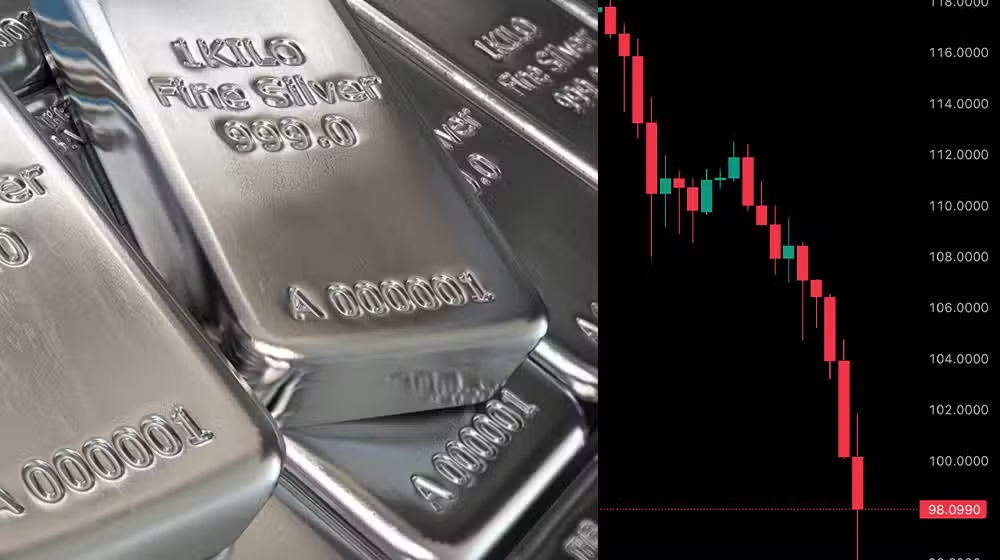
Silver has officially slipped into bear market territory after falling more than 22 percent from its recent record high. The precious metal, which surged to historic levels earlier this week, has now retreated sharply, signaling a shift in investor sentiment and market dynamics.
Earlier in the week, silver touched a high of around $122 per ounce, driven by strong speculative demand, inflation concerns, and broader uncertainty in global financial markets. However, the rally proved short-lived, and prices have since declined to below $98 per ounce. This drop reflects a significant correction and highlights the volatility currently affecting commodities.
Analysts suggest that profit-taking played a major role in the recent price decline. After a rapid surge, many investors chose to lock in gains, triggering a wave of selling pressure. Such corrections are common in commodity markets, especially after sharp rallies that push prices to record highs in a short period.
The broader economic environment is also contributing to silver’s recent weakness. Rising interest rates, fluctuating currency values, and ongoing geopolitical tensions have created uncertainty for investors. In times of economic instability, precious metals often act as a safe haven, but sudden shifts in risk appetite can lead to abrupt price swings.
Silver is widely used not only as an investment asset but also in industrial applications, including electronics, solar panels, and medical equipment. Changes in global manufacturing demand and economic growth expectations can therefore have a direct impact on silver prices. A slowdown in industrial activity can reduce demand and put downward pressure on prices, adding to market volatility.
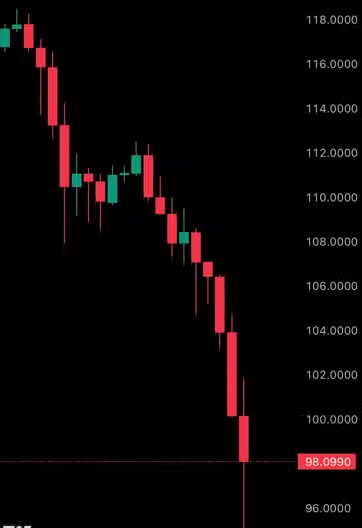
Despite the current downturn, some market experts believe silver could still find support in the medium to long term. Inflationary pressures, supply constraints, and continued interest in precious metals as a hedge against economic uncertainty may help stabilize prices. However, short-term fluctuations are likely to continue as investors react to economic data, central bank policies, and global market developments.
For investors, the recent decline serves as a reminder of the risks associated with commodity trading. While silver can offer diversification benefits and potential upside during uncertain times, it is also prone to sharp corrections. Monitoring macroeconomic trends and maintaining a balanced investment strategy remains crucial.
As global markets continue to navigate economic uncertainty, silver’s performance will remain a key indicator of investor sentiment and broader market trends. Whether this decline marks a temporary correction or the beginning of a prolonged downturn will depend on upcoming economic signals and shifts in global demand.